
Rare haematological conditions present distinctive diagnostic, management, and treatment optimisation challenges. With limited patient populations, real-world data is essential to understand rare blood disorder complexity, reveal specialist decision-making, understand the impact and burden of these diseases on the patient and healthcare systems, and enable the development of transformative rare haematology therapies.
Adelphi Real World’s Disease Specific Programme (DSP) databases are designed to address these needs.
Our DSPs generate comprehensive real-world data reflecting the complexities of rare blood disorders
We recognise and understand the challenges faced when working in rare diseases. Conducting research where true prevalence is unknown, and patients are more difficult to reach can be difficult. Our reliable and reputable methodologies ensure that representative samples are captured, and that the most appropriate analytical and statistical methods are utilised.
Through engagement with rare haematology specialists and patient populations, we provide essential insights on:
Diagnostic Pathways
Explore diagnostic journeys, disease phenotyping, genetic testing approaches, and how specialists identify and classify rare blood disorders.
Treatment Decision-Making & Management Strategies
Examine treatment decision making, treatment sequencing, utilisation of emerging therapies, treatment duration and reasons for switch and discontinuation, off-label approaches and the role of patients and healthcare providers in decision-making.
Disease Progression & Patient Burden
Understand how the disease has progressed since first presentation and diagnosis, including evolution of symptoms and other manifestations, clinician reported outcomes and impact on patient and caregiver health-related quality of life.
Unmet Needs
Identify critical knowledge gaps, therapeutic barriers, disease management challenges, emerging treatment approaches, and the specific outcomes that matter most to specialists and patients/ caregivers.
Rare Haematology Specific Programmes (DSPs) Portfolio
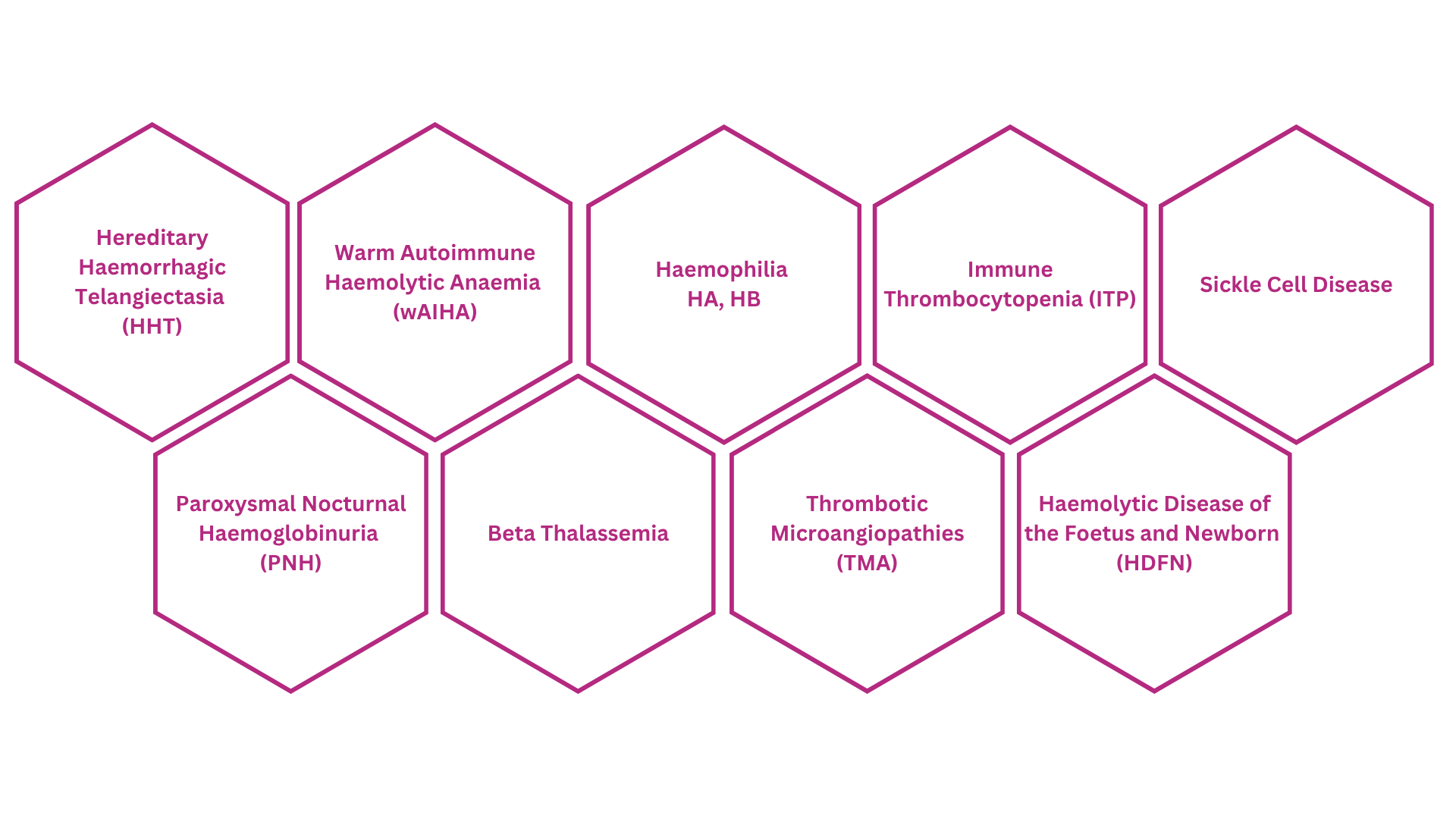
Click on the hexagons to expand.
Why Choose Adelphi for Rare Haematology Research?
Rare Haematology Expertise
Dedicated expertise in rare blood disorder methodology, small patient population research, and specialist decision-making in evidence-sparse haematology environments.
Specialist Networks
Direct access to rare haematology experts and patients living with rare haematology conditions across diverse healthcare systems.
Patient and Caregiver Informed Evidence
Patient and caregiver perspectives are key to ensuring rare diseases are fully understood. Adelphi actively engage with patients, caregivers and family members to ensure the data collected are relevant and meaningful, and to capture disease burden, treatment impact, and real-world quality of life.
Cross-Country Comparisons
Cross-country analysis enables understanding of how rare blood disorder management, diagnostic practices, treatment patterns, and patient experiences compares across markets and regions.
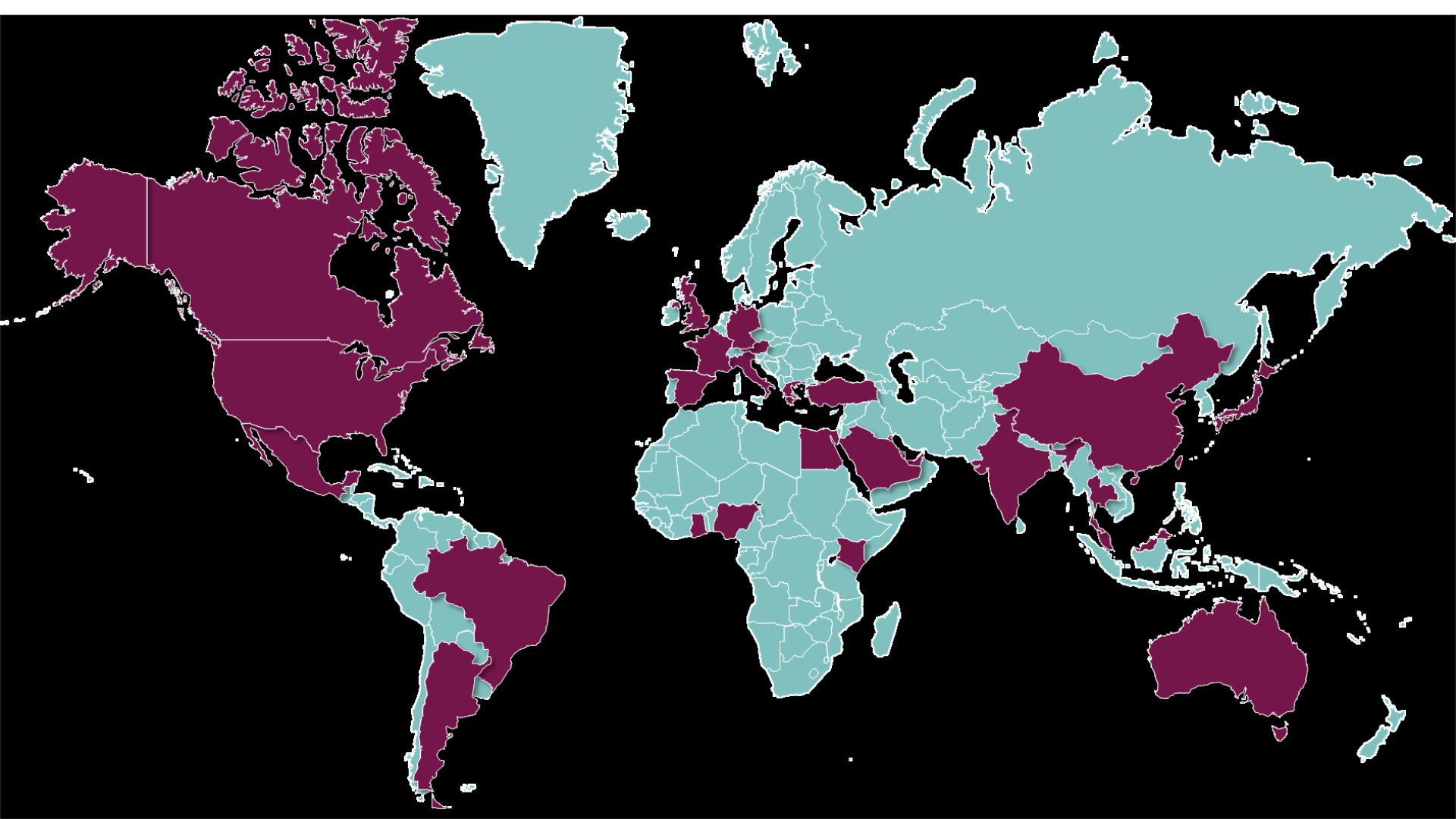
Current Countries Rare Haematology DSPs Cover
Our Partnerships
We work with biopharmaceutical companies, rare haematology centres, patient advocacy organisations, research institutions, and healthcare authorities to generate evidence to support rare blood disorder understanding and accelerate treatment innovation.
Explore Our Rare Disease Expertise
- Schedule a strategic discussion: Connect with our rare disease specialists to explore how our datasets and methodologies can support with your real-world evidence needs.
- Request customised resources: Interested in our rare disease research capabilities, international scope, specialist networks, or specific clinical applications? Contact our team for tailored information.
Strengthen your rare disease research with Adelphi Real World’s integrated DSP solutions. Let’s collaborate to deepen clinical understanding, drive therapeutic innovation, and ultimately improve outcomes for rare disease patients worldwide.
Conferences Attending
Observational Research